

Beginner’s Guide to Dental Practice Marketing Funnels
When you’re just starting a business, you need to work hard to gain traction. Over time, however, you may notice that you need to change your strategy to continue to grow your business.
One of the most effective ways to boost conversions and generate more revenue is with a marketing funnel. This funnel is basically a sequence of steps that prospective customers take in order to become purchasing customers. After your business gets off the ground, you need this structured approach to monitor your process and be sure that you’re keeping existing customers and gaining new ones.
In this post, we’ll discuss what a marketing funnel is and how you can build one for your business to gain more customers and revenue.
What is a Marketing Funnel?
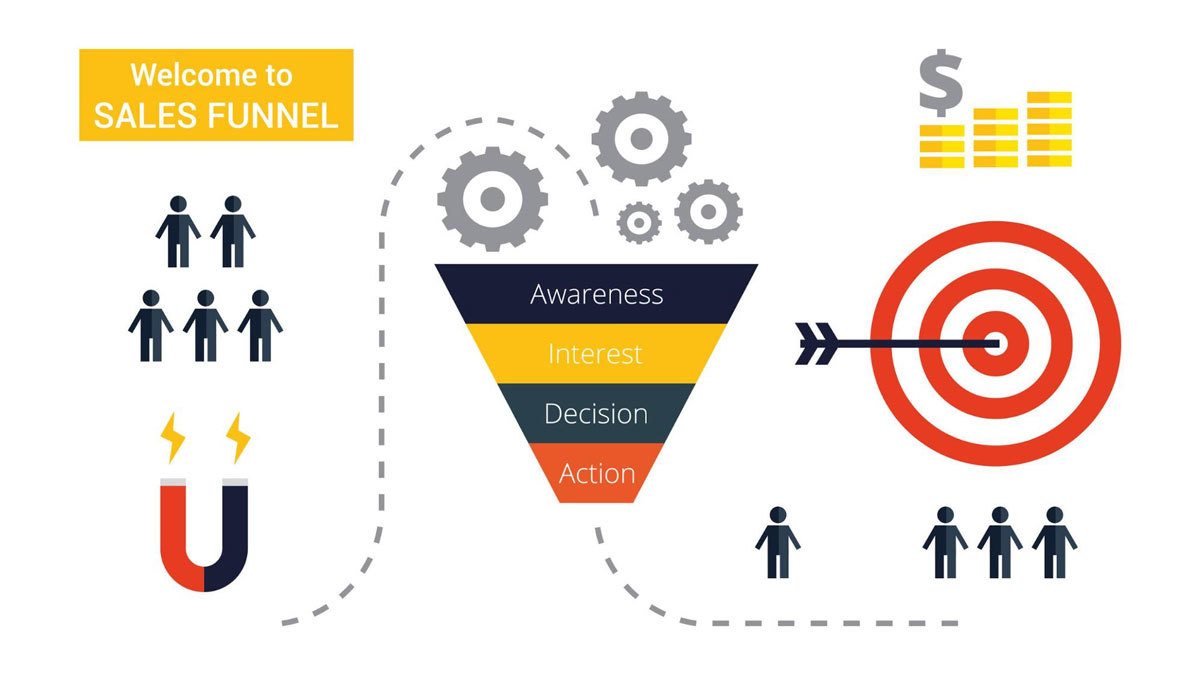
A marketing funnel is a path that a prospective customer takes from start to finish. This includes the first time they hear of your product or service to the moment of purchase.
Once you have this structure in place, you can analyse each step of the process to look for areas of improvement to increase conversions.
These are the stages of the marketing funnel:
Awareness
The awareness stage is the top of the funnel and refers to the moment when a customer becomes aware of your product or service. Your marketing materials at this point include:
Marketing strategies include:
The goal of marketing at this stage is to reach a broad audience and create awareness of your product or service.
Interest
The interest stage is when prospective customers are aware of your product and become interested in learning more about your product. Your marketing materials are geared toward education, such as:
This is the stage in which you can encourage a customer buy.
Commitment
The commitment stage is when a prospective customer is committing to your product and making the decision to buy. Your marketing materials at this stage include:
These are the basic stages, but some businesses further break down their funnel into smaller stages according to what aspects they want to analyse. Regardless of how complex your funnel is, having a systematic funnel gives you data about the customer’s buying journey that you can optimise along the way.
For example, if you were to determine that you were losing a lot of customers between the interest stage and the commitment stage, you could adjust your content or marketing materials to optimise for conversions.
Fixing Problems Within the Marketing Funnel
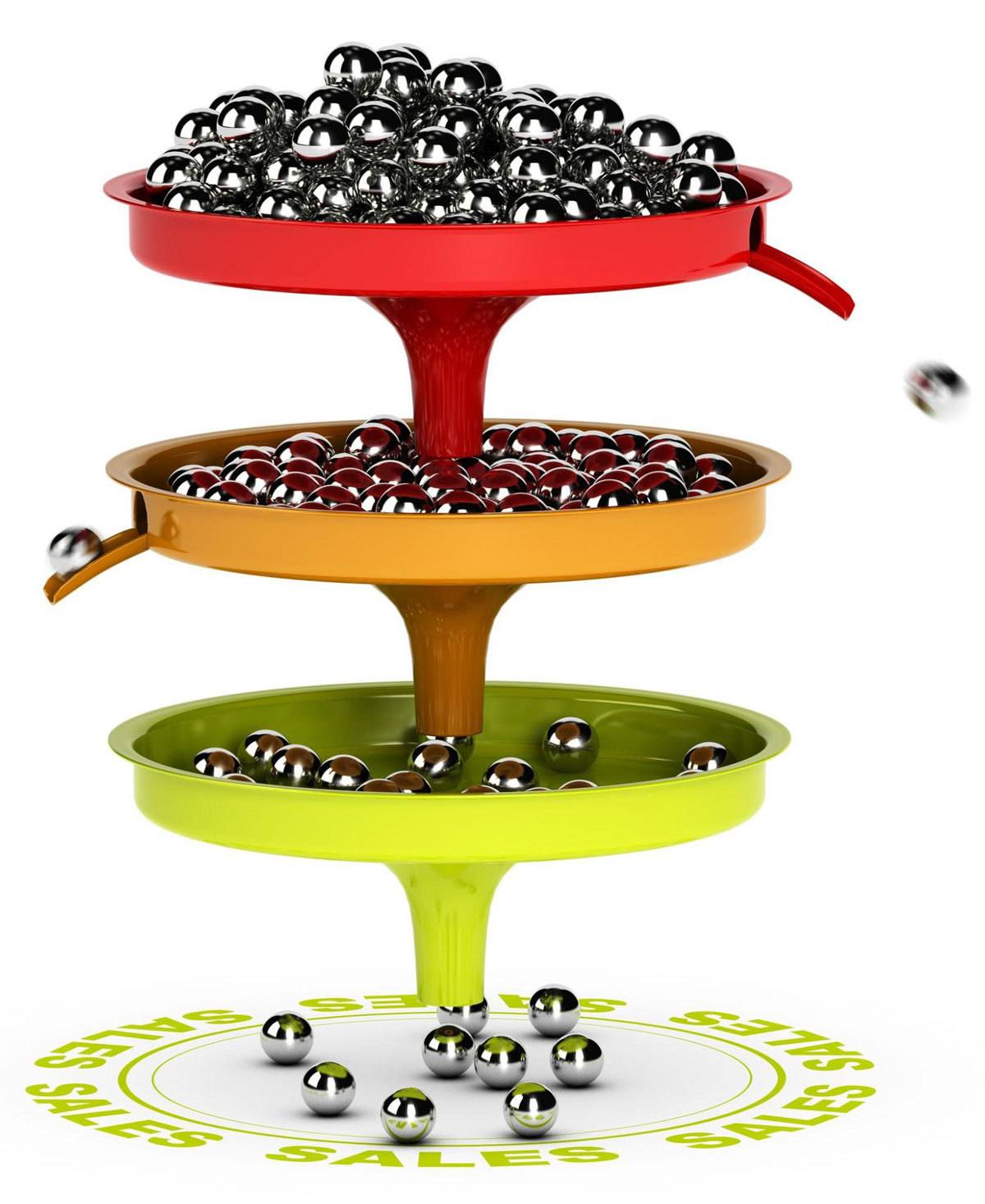
Marketing funnels are known as funnels because you will lose customers along the way, so the funnel gets smaller. Some people simply won’t move through to buy, and that’s just part of the process. To a certain extent, you should expect to lose some prospects between awareness and conversion.
When you’re losing excessive numbers of prospective customers at some point through the funnel, that’s when you need to review your process and see where you could improve. Having a systematic funnel is the first step in correcting this problem, which you may not even fully realise otherwise.
As you build your funnel, you should assign metrics to each stage:
Without these metrics, it’s difficult to know what part of the funnel is losing customers.
You should compare these metrics on a regular basis to see if you’re improving or declining. If you’re declining, you can then look for reasons that may be occurring.
Regardless of what stage is losing customers, there are two strategies that apply at any point:
Retargeting
If you’re seeing a lot of paid traffic to a particular post but your prospects are simply reading the article and clicking away without subscribing, downloading, or purchasing, there’s still a chance to convert.
Retargeting is a form of online advertising that lets you target visitors who left your site before converting. It gives you a chance to persuade them to come back and reconsider purchasing. This ad should be focused on an offer from the next stage of the funnel.
For example, if you’re seeing a lot of traffic without conversion, retarget those customers with an offer to subscribe to your email list. This can take them to a landing page that offers a free download they may have missed out on the first time around.
Once you’re familiar with this process, you can devise retargeting campaigns that address each stage of the funnel with relevant offers.
Chat
If prospects visit your site but aren’t able to find adequate answers to the questions they may have, it can be enough to cause them to click away. They could be reading your content and need further clarification, or looking at your price page and have questions about purchasing.
In these cases, live chat is an excellent tool. Regardless of where they are in the marketing funnel, live chat gives you an opportunity to answer all their questions and guide them into the next stage.
Get Started
Now that you know what marketing funnels are and how they can be used to improve your business, it’s time to build one. Start with the simple structure of a basic funnel, identify problems, and work on optimising them. As you learn and grow, you can expand your funnel to gain more customers and generate more revenue.